

In a nutshell
Hydrating means providing water to the skin and helping it retain it. Nourishing means providing fatty substances that restore its protective barrier. These are two distinct needs: skin can lack water without lacking oil, and the reverse is also true. In practice, skin needs both, but not at the same time: hydration in the morning with a fluid texture, and nutrition at night with a richer texture during the nocturnal regeneration phase.
"My moisturizer isn't enough anymore." This is probably the most common phrase heard in treatment rooms, and it almost always stems from the same misunderstanding: the cream works just fine; it’s simply not addressing the right need.
Hydrating and nourishing are two different actions, using different ingredients, to correct different deficiencies. Confusing them means buying the wrong product half the time. Here is how to tell the difference, and above all, how to know what your skin needs today.

Hydrating: providing water, and above all, retaining it
Hydrating the skin means increasing its water content. This water does not come from the cream itself, which never contains enough to make a difference, but from two sources: the water present in the deep layers of the epidermis and the humidity of the surrounding air.
The role of a hydrating treatment is therefore twofold. It provides humectant agents, which capture water and bind it into the stratum corneum. And it forms a light veil that slows evaporation. Well-hydrated skin is supple, plump, and reflects light better: this is what we call radiance.
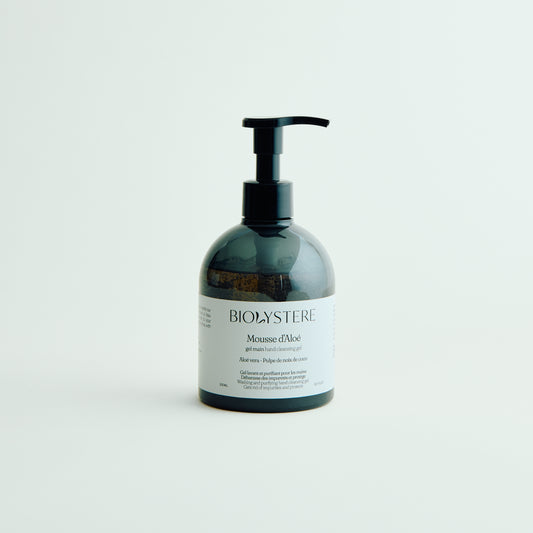
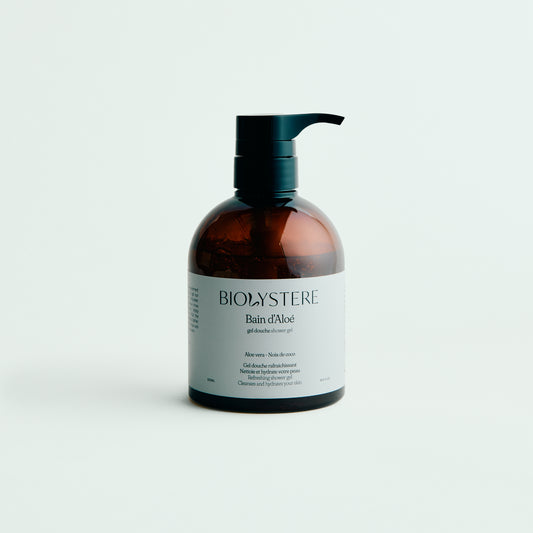
Aloe vera is one of the most iconic ingredients in this family: packed with water, it soothes and hydrates without weighing the skin down. It is found in most fluid textures.
Nourishing: rebuilding the barrier with fatty substances
Nourishing means providing lipids: vegetable oils, butters, fatty acids. These fatty substances do not fill the skin with water; they rebuild the cement that holds cells together and prevents water from escaping.
This is an essential distinction: nourishing is repairing the container; hydrating is filling the content. Skin with a damaged barrier can receive all the water in the world, yet it will lose it within hours. This is exactly what happens when a moisturizer seems to stop working by midday.
Shea butter, sweet almond oil, and coconut oil belong to this family. Rich in fatty acids, they restore the protective film and provide the lasting comfort that light textures do not offer.
The table that clears up the confusion
|
Hydrating |
Nourishing |
|
|---|---|---|
|
What is provided |
Water and agents that retain it |
Fatty substances: oils, butters, ceramides |
|
The need satisfied |
A lack of water in the cells |
A lack of lipids in the skin's cement |
|
The feeling achieved |
Suppleness, plumpness, brighter complexion |
Comfort, softness, disappearance of tightness |
|
Signs of deficiency |
Fine lines, dull complexion, skin that feels tight at times |
Roughness, flakes, constant discomfort |
|
Who is affected |
All skin types, depending on the season |
Mainly dry skin, and everyone in winter |
|
Ideal time |
Morning |
Evening |
A simple image to remember: imagine a sponge. Hydration is the water you pour onto it. Nutrition is what keeps the sponge from drying out and hardening. Pouring water on a dried-out sponge isn't very useful: it just runs off and disappears.

What is your skin lacking?
Two tests are enough to decide, and they take just a few seconds.
The pinch test, for dehydration
Gently pinch the skin of your cheek between two fingers, then release. If fine vertical lines appear before the skin returns to its place, it lacks water. With properly hydrated skin, the return is immediate.
The touch test, for lack of lipids
Run your fingertips over your cheek, dry, at the end of the day. A rough, slightly gritty, sometimes flaky surface indicates a lack of fatty substances. Skin that only lacks water remains smooth to the touch, even when it feels tight.
Both results can be positive at the same time, which is common in winter or after a vacation. In this case, the skin needs both, and a day and night routine makes perfect sense.
Why one single cream cannot do it all
That is the question everyone asks, and the answer lies in the chemistry of textures. A highly hydrating treatment contains a lot of water phase and few fatty substances: it penetrates quickly, leaves no finish, but builds no lasting barrier. A nourishing treatment contains the opposite: it protects effectively, but its texture is too occlusive for morning application under makeup, and it provides little water.
"All-in-one" formulas exist, and they make a compromise. They are fine for normal skin with no particular needs. As soon as the skin expresses a marked deficiency, the compromise becomes insufficient: the texture is too heavy for the morning and too light for the night.
Hence the day and night logic, which is not a marketing ploy but a response to the skin’s biological rhythm.
Morning hydrates, evening nourishes
Why morning calls for hydration
The day exposes the skin to wind, cold, pollution, air conditioning, and temperature fluctuations. It needs water, suppleness, and a texture that won't bother it under makeup. L’Hydratante fulfills this role: a fluid texture, based on sweet almond oil, that penetrates without a greasy finish. Apply it to skin that is still slightly damp; the residual water is captured by the product, and the yield is significantly better.
Why evening calls for nutrition
At night, the skin changes pace. Cell renewal intensifies, microcirculation increases, and water loss reaches its maximum. This is the time when a rich treatment yields the most results, and its texture poses no problem since you are sleeping. La Nourrissante is designed for this window: denser, more lipid-rich, it rebuilds what the day has worn down.
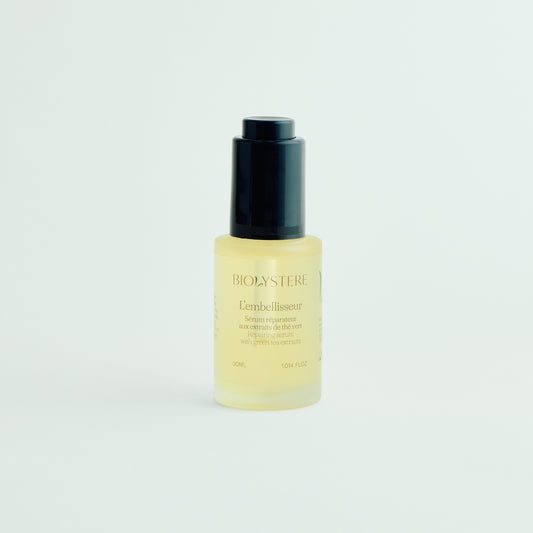
If you wish to add a targeted step, L’Embellisseur should be applied in the evening before the cream, on clean skin. The complete day and night duo is combined in the L’Essentielle range, and the Night Repair Range focuses the effort on the regeneration phase.
Which routine for your skin?
|
Your skin |
Morning |
Evening |
|---|---|---|
|
Dry |
L’Hydratante |
La Nourrissante, every evening |
|
Combination |
L’Hydratante, thin layer on the T-zone |
L’Embellisseur, La Nourrissante on the cheeks if needed |
|
Oily |
L’Hydratante in a thin layer |
L’Embellisseur only |
|
Normal |
L’Hydratante |
La Nourrissante in winter, L’Embellisseur in summer |
|
Occasionally dehydrated |
L’Hydratante on damp skin |
La Nourrissante, even if the skin isn't dry |
If you are unsure of your profile, our 3-step test gives you an answer in two hours. Detailed routines can then be found in the articles dedicated to dry skin and combination skin.

The most frequent errors
-
Nourishing skin that lacks water. The comfort returns for an hour, then the tightness returns as well. The underlying lack is not treated.
-
Hydrating skin that lacks oil. The water provided evaporates due to the lack of a barrier to hold it in. This is the famous "my cream doesn't last the day."
-
Using an oil alone on dehydrated skin. An oil nourishes but does not hydrate: it seals a state, it does not correct it. It should be applied over a treatment, never in place of one.
-
Drying out oily skin that shines. Oily skin can lack water, and stripping it worsens sebum production. It needs light hydration, not correction.
-
Changing creams before a month of use. No treatment can demonstrate its effect in less than one cell renewal cycle, which is about four weeks.
And the body?
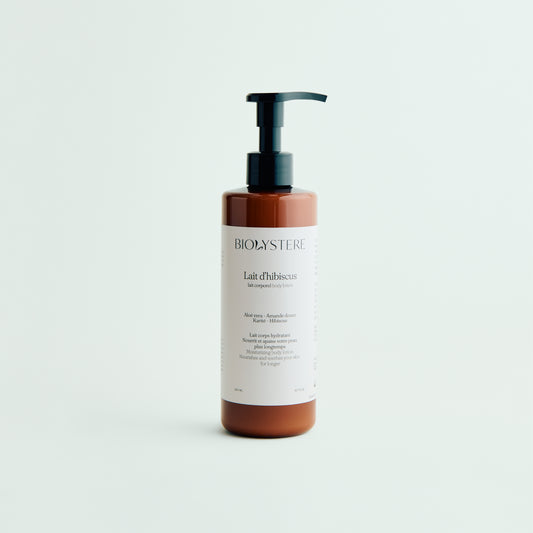
The same logic applies, with one nuance: the skin on the body has far fewer sebaceous glands than the face, so it naturally tends toward a lack of lipids. Nutrition there almost always takes precedence over hydration alone. Le Lait d’Hibiscus addresses this need, as hibiscus oil is traditionally associated with suppleness and radiance. All the treatments can be found in the Body and Hair collection.
The action that changes everything remains the same: apply within three minutes of showering, while the skin is still damp.
Frequently Asked Questions
Can you use a night cream in the morning?
Nothing forbids it, but the texture is generally too rich to hold up under makeup and leaves a shiny finish by the end of the morning. If your skin is very dry and you are not going out, it remains a valid occasional option in winter.
Does oily skin need to be nourished?
Rarely, and never with rich textures. It already produces its own lipids. On the other hand, it often needs to be hydrated, which is a completely different thing. Confusing the two is the main cause of routines that worsen shine.
Should you change your routine in winter?
Yes, in the sense of nutrition. Cold and heating weaken the skin barrier for all skin types. A richer treatment in the evening from November on is generally sufficient, without needing to modify the morning routine.
Does a serum replace a cream?
No, it complements it. A serum provides a concentration of active ingredients on clean skin, but it does not form the protective veil that limits evaporation. Serum then cream, in that order, never the other way around.
Is drinking plenty of water enough to hydrate your skin?
It contributes to it, without being sufficient. The water you drink is distributed primarily to vital organs, and the skin receives what remains. Good internal hydration helps, but it never replaces a functional skin barrier, which is built by the treatments applied.
In summary
Hydrating provides water, nourishing provides oil. Skin needs both, at different times: in the morning to face the day, in the evening to rebuild. This is the entire logic of our facial treatments, gathered in the Face collection and formulated in the south of France; they are vegan, paraben-free, and dermatologically tested, as you can read on our About page.
Once this distinction is grasped, choosing a treatment becomes simple. It is no longer a matter of looking for a miracle product, but of answering the right question: what is my skin lacking, right now?