

In brief
Skin that feels tight after a shower is a sign that the hydrolipidic film—the thin protective layer of oil on the skin's surface—has been weakened. The most frequent causes are water that is too hot, a shower gel that is too harsh, hard water, rubbing while drying, and the lack of after-shower care. Three simple steps are usually enough: lower the temperature, switch to a gentle cleanser, and apply a body cream within three minutes, while the skin is still damp.
It is a sensation many find almost normal: you get out of the shower, your skin feels clean, a little rough, and it feels tight. On your legs, your arms, sometimes all over. You get dressed, the feeling fades, and you don’t think about it again until the next day.
However, this tightness is not insignificant. It indicates that the shower has stripped more than just the day's grime from your skin.

What tightness reveals
The skin's surface is covered in a very thin film composed of sebum, sweat, and lipids, known as the hydrolipidic film. It plays a dual role: retaining water inside the skin and acting as a barrier against external aggressors.
This film is partially soluble in water and cleansing products. A shower always removes a little bit of it—this is inevitable, and the skin knows how to replenish it within a few hours. The problem arises when it is removed faster than the skin can rebuild it, day after day.
Tightness is precisely the signal of this imbalance. The skin loses water and contracts slightly, and this is what you feel. Over time, the body's skin becomes dry, rough, and sometimes prone to itching. This is the same mechanism as on the face, where we detailed the difference between hydrating and nourishing the skin.
The 5 most frequent causes
|
Cause |
How to recognize it |
The fix |
|---|---|---|
|
Water too hot |
Skin is red upon exiting, feeling of tightness is immediate |
Lower the temperature, aim for lukewarm water and a 5 to 10-minute shower |
|
Shower gel too harsh |
Skin "squeaks" under your fingers; that itchy, clean feeling |
Switch to a gentle cleansing base without excess surfactants |
|
Hard water |
White residue on faucets, rough linens, tightness even with a good product |
Rinse with lukewarm water, always apply body care afterward |
|
Rubbing dry |
Diffuse redness, skin itches when getting dressed |
Pat dry with a towel instead of rubbing |
|
No after-shower care |
Skin feels tight in the minutes that follow, then settles down by the end of the day |
Apply body cream within three minutes, while skin is still damp |
In the vast majority of cases, two or three of these causes overlap. The good news: they can all be corrected without changing your lifestyle.
Shower gel, often the primary culprit
This is the factor we have the most control over, and the one we suspect the least. A cleansing product that lathers heavily and leaves a "squeaky clean" feeling is almost always too harsh for daily use. This sensation is not a sign of efficacy: it is a sign that the skin has been stripped of oils beyond what was necessary.
|
What to look for |
Why it matters |
|---|---|
|
A gentle cleansing base |
Strong detergents clean effectively, but also remove the lipids that protect the skin |
|
Presence of moisturizing or soothing agents |
Aloe vera, glycerin, and vegetable oils limit the drying effect of washing |
|
A discreet scent |
The heavier the fragrance composition, the higher the risk of discomfort for reactive skin |
|
Dermatologically tested |
This is a guarantee of tolerance, especially useful for a product used daily |
|
The ingredient list |
A short, readable list remains the best indicator for easily irritated skin |
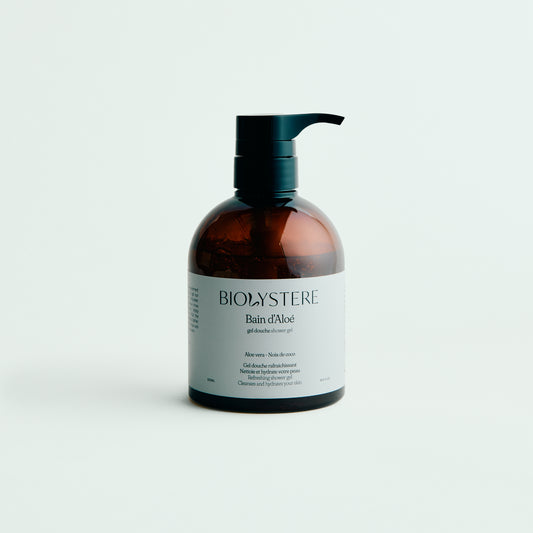
It is with this in mind that we formulated Bain d’Aloé, our aloe vera shower gel: a gentle cleansing base, a naturally derived, vegan formula, dermatologically tested, and designed for daily full-body use. If your skin is easily reactive, our advice for choosing products adapted for sensitive skin also applies to the shower.

The water itself plays a role
Temperature
Hot water dissolves lipids much more effectively than lukewarm water. It is pleasant in winter, but it is the fastest way to dry out the body's skin. A lukewarm shower of five to ten minutes is more than enough, and you will feel the difference in comfort within a few days.
Hard water
In much of France, tap water is hard, meaning it is rich in calcium and magnesium. These minerals leave a thin film on the skin after rinsing, accentuating the feeling of roughness and tightness. If you have noticed your skin is better on vacation or after moving, the water is likely the cause.
You cannot easily change your water's hardness, but you can compensate: rinse with lukewarm rather than hot water, avoid soaps that react poorly with minerals, and above all, never skip body care after your shower.
The 4 habits that change everything
-
Shorten and cool your shower. Five to ten minutes at a lukewarm temperature is the habit that costs the least and yields the most.
-
Switch to a gentle cleansing base. Use a gentle product all over, and focus thorough washing only where necessary: armpits, feet, and creases.
-
Pat dry instead of rubbing. Leave the skin slightly damp on purpose; this allows the subsequent care product to work better.
-
Apply body cream within three minutes. This is the window where the skin still contains surface water: the product locks it in instead of letting it evaporate.
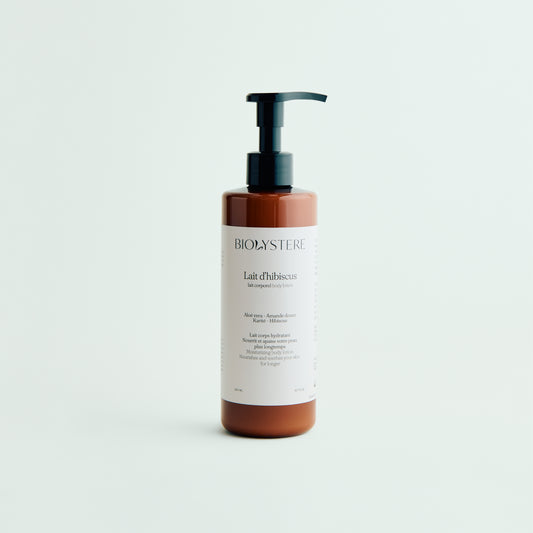
For this last step, Lait d’Hibiscus, our body cream, was designed for daily application, with a texture that absorbs without leaving a sticky film. Hibiscus is an ingredient we value for its nourishing qualities and delicate scent. And because hands are the area most exposed to repeated washing, Crème d’Amande takes over after each exposure to water, or as a duo in our Hand Ritual.

In winter, everything gets worse (and that's normal)
If you notice that tightness appears mostly between November and March, you are not imagining it. Three factors combine in the cold season. Outdoor air is dry and cold, which increases water loss at the skin's surface. Indoor heating dries the air further, often to below 40% humidity. And showers naturally become hotter and longer, at the exact moment the skin can handle it the least.
The adjustments are simple: maintain a reasonable heating temperature in the bedroom, switch to a slightly richer body care texture at night, and protect the most exposed areas. Hands, neck, and face are the first to show signs, because they are the only areas left exposed all day.
For the face, this is also the season when a night cream makes perfect sense, which we detail in our article on day vs. night cream. Shea butter, whose nourishing virtues we have described, and sweet almond oil are the two reference ingredients for this period.
Mistakes that perpetuate the problem
-
Confusing cleanliness with degreasing: well-cleansed skin stays supple to the touch; it doesn't "squeak."
-
Waiting until you're dressed to moisturize: after ten minutes, the window where the skin best retains water is closed.
-
Using a scrub every week on tight skin: scrubbing removes an already weakened protective layer. Once a month is enough, and it should be avoided as long as the skin feels uncomfortable.
-
Changing products every two weeks: it takes about three weeks to evaluate a body care routine.
When tightness isn't just a shower issue
It is important to distinguish between two situations. Skin that is occasionally dehydrated lacks water: it feels tight, looks dull, and regains comfort in a few days once the right habits are in place. Constitutionally dry skin lacks lipids permanently: it requires regular nourishing care, all year round, and not just after the shower.
If you don’t know which category you fall into, our skin type test provides an answer in a few minutes. For the face, the logic is the same, and we have detailed it in the facial routine for dry skin as well as in our article on combining day cream and night cream.
One final, important point: if the itching is intense, if red patches, scaling, or cracks appear, or if the tightness persists despite all these adjustments, it is no longer just a cosmetic discomfort. Dermatological advice is required, as certain skin conditions require appropriate treatment.
A simple ritual, morning and night
At BIOLYSTERE, we believe that a routine you stick to over time is better than a perfect routine abandoned after ten days. Two products are enough for the body: a gentle shower gel and a body cream applied immediately after. Our products are formulated and manufactured in France, using naturally derived, vegan, paraben-free ingredients, and are dermatologically tested. You can find them in our Body Care collection, and our approach explains why we chose to keep it brief rather than extensive.
Frequently Asked Questions
Why does my skin feel tight after a shower?
Because the shower has removed part of the hydrolipidic film that protects your skin and retains its water. Water that is too hot, a shower gel that is too harsh, hard water, or a lack of moisturizer after the shower are the most common causes.
Which shower gel should I choose for tight skin?
A product with a gentle cleansing base, containing moisturizing or soothing agents like aloe vera or glycerin, low in fragrance, and dermatologically tested. The simplest rule: if the skin "squeaks" after rinsing, the product is too harsh for daily use.
Should I moisturize my body every day?
For tight skin, yes, at least after every shower. Once comfort is restored, many skin types are satisfied with a daily application in the evening. Those with constitutionally dry skin should maintain the rhythm all year round.
Does hard water really damage the skin?
It does not damage it in the strict sense, but it clearly accentuates the feeling of tightness and roughness after rinsing. On already dry or reactive skin, it is an aggravating factor that is best compensated for by applying care systematically after the shower.