

In brief
A dull complexion stems from skin that reflects light poorly, for six main reasons: dehydration, buildup of dead cells, lack of sleep, diet and smoking, sun exposure, and prolonged stress. Correction relies on three steps: hydrating morning and evening, gentle exfoliation once a week, and applying a night treatment every evening to support regeneration. Initial results appear in about ten days, with full radiance in four weeks.
A dull complexion is frustrating because it cannot be "fixed" like a pimple or redness: it has no precise location, no outline, and no one else really notices it but you. Yet, it is one of the most common reasons for consultation, and one of the easiest to correct once the cause is identified.
Because there is indeed a cause, often two. Here is how to recognize yours, and the ten-day method to restore the light your skin has lost.

What exactly is a dull complexion?
Radiance is not a poetic concept; it is an optical phenomenon. Luminous skin is skin whose surface is smooth and even: light hits the epidermis and reflects back homogeneously, which gives that impression of freshness and relief.
When the surface becomes irregular, light scatters instead of reflecting. The skin then appears matte, gray, and lacking depth. Three elements produce this irregularity: a horny layer thickened by dead cells, a lack of water that causes cells to sag, and slowed microcirculation that deprives the skin of its natural dew.
The good news lies in this mechanic: a dull complexion is a surface condition, not a characteristic of your skin. It can always be corrected.
The 6 causes of a dull complexion
They often accumulate. First, identify the main one that best matches your current situation.
|
The cause |
How to recognize it |
The correcting step |
|---|---|---|
|
Dehydration |
Pinching the cheek reveals fine lines |
Hydrate morning and evening, on damp skin |
|
Accumulated dead cells |
Skin rough to the touch, makeup sticks/clumps |
One gentle scrub per week, no more |
|
Lack of sleep |
Gray complexion upon waking, dark circles, radiance returning on weekends |
A night treatment every evening, without exception |
|
Tobacco, alcohol, poor diet |
Yellowish or grayish complexion, constant and persistent |
Antioxidants in skincare and diet |
|
Repeated sun exposure |
Thickened horny layer, spots, tan turning dull |
Daily sun protection, nightly repair |
|
Prolonged stress |
Complexion looks muddled in cycles, correlated with moments of tension |
Routine regularity, massage techniques |
1. Dehydration, the number one cause
It is by far the most common and the fastest to correct. A cell that lacks water sags, the surface becomes irregular, and light scatters. The test is immediate: pinch the skin of your cheek and release. If fine lines appear before the skin returns to flat, your skin is lacking water. Note that dehydration affects all skin types, including oily skin.

2. The accumulation of dead cells
Cell renewal slows down with age, cold weather, and after sun exposure. Dead cells accumulate instead of detaching, forming an opaque layer that masks light. The sign: skin that feels rough under your fingers and makeup that clings in patches.
3. Lack of sleep
Nighttime is when the skin regenerates most actively and when cutaneous microcirculation is most intense. A short or fragmented night interrupts this process. The characteristic sign: a complexion that visibly brightens after two or three full nights, typically on weekends.
4. Diet, tobacco, and alcohol
Tobacco reduces the caliber of the micro-vessels that irrigate the skin and generates significant oxidative stress. Alcohol dehydrates and dilates. A diet poor in fruits, vegetables, and good fatty acids deprives the skin of its antioxidants. These causes result in a constant dull complexion that does not vary from day to day.
5. Repeated sun exposure
UV rays thicken the horny layer as a defense mechanism and degrade the lipids of the skin barrier. This explains the well-known paradox of a tan that, as it fades, leaves a complexion duller than it was before the summer. This subject is detailed in our article on dehydrated skin after summer.
6. Prolonged stress
Chronic stress alters microcirculation and disrupts sleep, two factors directly linked to radiance. It is also often accompanied by a relaxation of one's routine, which aggravates the issue. The sign: a muddled complexion in cycles, correlated with moments of tension.
The 3 steps that restore radiance
Regardless of the identified cause, the cosmetic response rests on the same foundations. Our products are formulated and manufactured in the south of France, vegan, paraben-free, and dermatologically tested, as detailed on our About page.
Hydrate, morning and evening
This is the step with the best effort-to-result ratio. Apply L’Hydratante in the morning on slightly damp skin, and La Nourrissante in the evening. Both are available in the L’Essentielle range. If the distinction between the two steps does not seem clear to you, our dedicated article explains it in detail.

Exfoliate, once a week
A gentle weekly scrub is enough to release the light trapped under dead cells. The temptation to do more is real, as the result is immediate, but it quickly backfires: a barrier damaged by excess exfoliation becomes drier, and therefore duller. Once, not twice.
Support nightly regeneration
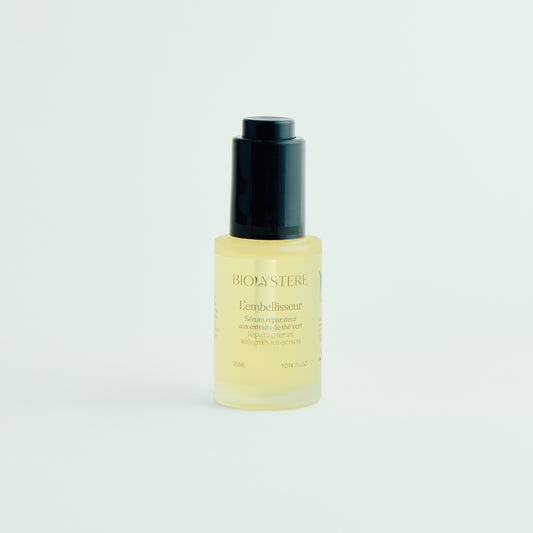
This is the most decisive step for the complexion. L’Embellisseur is applied in the evening before your cream on clean skin: its serum texture penetrates quickly and works during the phase when the skin renews itself most. For more intensive action, the Gamme Réparatrice Nuit concentrates the effort on this same window.
The 10-day protocol
If you want a visible result before an event, or simply want to measure what these steps change, here is the sequence to follow.
|
Timing |
The step |
Why it matters |
|---|---|---|
|
Day 1 |
Hydration morning and evening on damp skin |
Lack of water is the most common and fastest cause to correct |
|
Day 3 |
One gentle scrub, only once |
Releases the light trapped under dead cells |
|
Day 4 to 10 |
Night treatment every evening, without exception |
Nighttime regeneration is the engine of radiance |
|
Day 7 |
Facial massage, two minutes |
Boosts microcirculation and drainage |
|
Day 10 |
Photo in the same spot, same lighting |
The only reliable way to measure complexion progress |
The photo tip is not anecdotal. Radiance evolves too gradually to be perceived in your own mirror daily: it is the comparison ten days apart, in the same lighting conditions, that makes the progress visible.
Ingredients that work on radiance
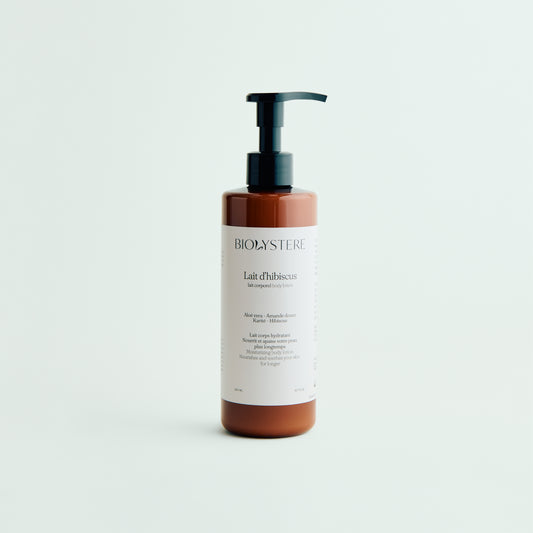
Green tea is particularly indicated here: rich in antioxidant polyphenols, it helps the skin defend itself against oxidative stress, one of the direct factors of a gray complexion. Hibiscus oil is traditionally associated with radiance and skin suppleness, and aloe vera provides the water that is almost always missing from dull skin.
In terms of nutrition, sweet almond oil and shea butter restore the barrier and smooth the surface, which mechanically improves the way light reflects.

Two free, often overlooked steps
Facial massage, first. Two minutes in the evening, from the center of the face outwards, moving upwards. It stimulates microcirculation and drainage, two mechanisms directly linked to complexion color. This is the step with the most immediate effect, and it costs nothing.
Cold water on the face, then, in the morning, a few seconds after cleansing. It causes vasoconstriction followed by a reflex vasodilation that provides an instant boost of radiance. The effect is temporary, but it remains real before an important day.
When a dull complexion hides something else
In the vast majority of cases, the steps described here are sufficient. However, some signals deserve medical advice rather than a routine adjustment: a persistent yellow complexion, unusual pallor accompanied by significant fatigue, or a color change that has been present for several weeks with no identifiable cause.
An iron deficiency, a thyroid disorder, or anemia sometimes manifest themselves first through the complexion. No cosmetic treatment can correct these, and it is better to know early.
Frequently asked questions
How long does it take to regain a radiant complexion?
Initial results are visible in about ten days, essentially thanks to hydration and exfoliation. Full radiance requires about four weeks, the duration of an adult cell renewal cycle, slightly longer after age forty.
Is scrubbing enough to regain radiance?
It provides an immediate but short-lived result. Without subsequent hydration, the skin becomes dull again in a few days, and repeated scrubbing ends up worsening the situation. Scrubbing is a supplemental step, never the core of the routine.
Can oily skin have a dull complexion?
Absolutely, and it is common. Sebum shine has nothing to do with radiance: skin can be oily and look gray at the same time, usually because it lacks water. This is the whole difference between hydrating and nourishing.
Do you need a specific radiance treatment, or is a good routine enough?
A regular routine corrects the majority of dull complexions, because the cause is almost always a lack of water or consistency. A targeted treatment provides useful reinforcement for tired skin or after the summer, but it never compensates for an irregular routine.
Does diet really change the complexion?
Yes, over time. Colorful fruits and vegetables, good fatty acids, and sufficient hydration provide the skin with the antioxidants it needs. The effect is not spectacular in a week, but it is clear over three months.
Summary
A dull complexion is a symptom, not a fatality. Identify the main cause among the six, then apply the three foundational steps: hydrate morning and evening, exfoliate once a week, and support nighttime regeneration. Our face care products are gathered in the Face collection, and our skin type test will help you choose the right textures.
Ten days to see the difference, four weeks to make it last. That’s not long, for a result you notice every morning.